New Class, New Roles
How Social Identity Shapes the Start of School – and How Educators Can Respond
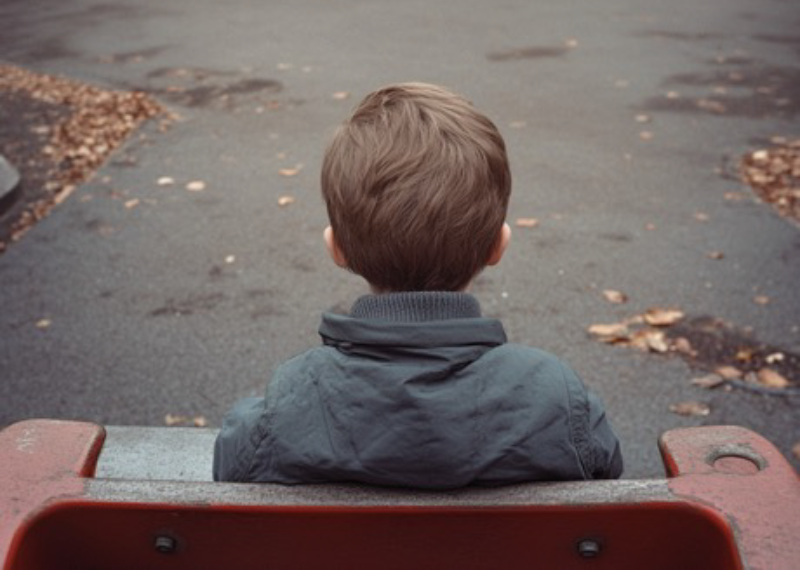

Social Identity: A Theoretical Lens for Everyday School Life
The theory of social identity (Henri Tajfel, John Turner) explains how our self-image is shaped by the groups we belong to. We define ourselves largely through the social groups we see as part of our identity – for example as a football player or as a person with a migration background. Everyone belongs to multiple groups at the same time, and this web of affiliations forms our social identity.
These affiliations also influence how others see and treat us – consciously or unconsciously. From the very first days of school, informal role assignments emerge that can shape the entire school year, often more persistently than we realise. Students quickly pick up on similarities and differences: Who looks “different,” who behaves “differently”? Who has an “embarrassing” hobby or an expensive clothing style?
Tajfel and Turner demonstrated these effects in their minimal group experiments, where students were divided into arbitrary groups (Klee group vs. Kandinsky group). Although there were no real differences, participants spontaneously favoured members of their own group when completing tasks. This tendency, known as ingroup bias, shows how even imagined group affiliations can strongly shape our behaviour.
For the school context, this means: children and young people notice who wears similar clothes, who uses the same emoji language, or who gets along with certain teachers – and these categories influence how they interact.
Importantly, group belonging is not inherently negative. It provides identity and a sense of community. For instance, for a student with a refugee background, connecting with peers in similar situations can be a positive resource. At the same time, group labels carry risks: once they are tied to value judgements (e.g. “the sporty ones” vs. “the weak ones”), hierarchies, stereotypes, and tensions between ingroups and outgroups can arise.
This is why teachers should pay close attention early on to the informal groups and roles that form within a class. Developing an awareness of these processes makes it possible to intervene if exclusionary tendencies appear – and to actively foster cohesion across groups.
Social Roles as Spaces for Development
Roles become problematic when the labels given to children (“the class clown,” “the nerd”) turn into narrow boxes. In such cases, young people feel pushed into expectations that limit their personal development. Silent labelling is especially insidious: often students are not openly named, but everyone implicitly knows who is considered “weak in performance” or who “always causes trouble.” Such labels can take on a life of their own and turn into self-fulfilling prophecies.
Schools should therefore be places where these role attributions are constantly challenged and broken open. In practice, this means creating spaces where students can experience themselves in new ways. Changing group compositions, project-based learning, and elective subjects allow them to step out of fixed patterns. Equally important is broadening the definition of success: not only academic achievement, but also social, artistic, or practical skills deserve recognition.
Today’s classrooms are highly diverse. Different cultural backgrounds, languages, and life experiences come together. In Austria, 19.3% of students in 2022/23 held foreign citizenship, and 27% spoke a non-German language at home (Vienna: 39.9% and 51.6%). (Source: Austrian Integration Fund). This diversity is a strength, but it also brings the challenge of actively fostering belonging across differences. Every student should feel that they belong – regardless of origin, appearance, achievement level, or other characteristics.
Social psychology highlights the importance of two fundamental needs: self-worth (“I am good enough”) and belonging (“I am part of this group”). If a student believes, “Others think I don’t belong here,” their sense of self-worth is undermined. To counteract such dysfunctional beliefs, it helps to encourage students to reflect on their own strengths and multiple identities. By realising that they can be many things at once (perhaps an athlete, a gamer, and more), children and young people develop a richer, more positive self-image.
In this way, social identity does not become a drawer that confines them, but a playground that enables growth, discovery, and development.
Practical Ideas for Building a Strong Class Identity
The first weeks in a new class are a special phase – much is still open, much is just beginning to form. Teachers can make the most of this moment: with small impulses, a sense of togetherness can be fostered right from the start.
• Define shared values and rules: At the very beginning of the school year, basic class rules and values should be worked out together with the students. When everyone has a say in what behaviours and principles matter, identification with the class increases. A jointly created “class credo” or poster of agreed values can be displayed in the classroom.
• Shape relationships actively – don’t just let them “happen”: For first encounters, use activities that encourage personal connections. In the first days, simple games help students discover commonalities – e.g., a bingo where everyone must find someone who shares the same hobby or favourite food. Just as important: talk about differences, too, and send the message that diverse backgrounds and interests are normal in this class. Highlighting similarities early while respecting differences fosters empathy and a sense of we.
• Use diversity as a resource: Differences in language, background, or life experience should be addressed openly – not romanticised, but recognised as reality. A simple activity: the class collects what each person brings – languages, hobbies, special experiences – on a poster or digital board. This makes it visible that diversity exists, is seen, and belongs to everyone.
• Rotate groups and roles: Group dynamics can solidify quickly – often to the detriment of some students. Teachers can counter this by mixing up seating plans, partner work, or project groups regularly. This way, students learn to cooperate with many peers. Rotating roles is equally important: sometimes the quiet student moderates, sometimes the “loud voice” takes on the task of organising. This opens space for growth and strengthens social learning.
• Create shared experiences and rituals: Nothing connects more than experiences together. Plan early for activities where the whole class achieves something collectively – a class project, a small excursion, or a teamwork challenge during lessons. Even creating the classroom environment together can build the feeling: “We did this as a team.” Simple rituals also foster unity: starting the day together, having a class motto, or a shared song. Repetition gives structure, strengthens identity (between students and teachers alike), and makes the difference between “having a class” and “being a class.”
• Explore different life worlds: To build empathy and perspective-taking, let students step into other roles. Provide them with short biographies of people with different backgrounds, interests, or challenges. In groups, they present in the first person: “My name is Sara, I’m 13, and I grew up with two languages…” Afterwards, the class reflects: How does it feel to belong – or not belong – to a certain group? What labels might have been placed on the person – and why?
• Encourage reflection on personal identity: If a student only ever sees themselves as “the shy one” or “the sporty one,” they risk being stuck in a narrow role. Activities that broaden self-perception can open new perspectives: ask students to write an “I am…” list (e.g., big brother, Viennese, hobby coder, animal lover). Sharing these lists makes it visible: every person has many sides. This creates more understanding – and reduces the tendency to reduce peers to stereotypes or appearances.